5678 communicate

  • Subscribe to our RSS feed.
  • Twitter
  • StumbleUpon
  • Reddit
  • Facebook
  • Digg
Showing posts with label story grammar marker. Show all posts

Wednesday, 28 August 2013

Story Grammar Marker Instruction: Element ID & Oral Retelling

Posted on 07:00 by Unknown
When choosing stories to use with my students, I make sure they are at least at the level of the Complete Episode since that is where the majority of my upper elementary kids are working towards.  A Complete Episode includes the following elements:


  • Characters:  Who or What is the story about?
  • Setting:  Where and When does the story take place?
  • Initiating Event (Kick Off):  What happened to the character to cause him/her/it to do something? (It was a ho-hum day until...)
  • Internal Response (Feeling):  How did the character feel about what happened?
  • Plan:  What does the character want to do?  Why will he/she/it choose this plan?
  • Attempts:  What actions do the character take to achieve the plan?
  • Direct Consequence (Tie Up):  What happened as a result of the attempts/actions?
  • Resolution:  How does the character feel about the direct consequence?  Is there a lesson learned or moral to the story?
After establishing that those elements are present, I fill out an organizer for myself.  This organizer template is provided with the program.  It looks like this:


It is definitely helpful to have this organizer filled out prior to the lesson otherwise it just never goes as smoothly as you planned!  


HOW I USE THIS WITH MY LANGUAGE GROUPS:

After I read the story to the group (I plan a whole 30-minute session for this), we move right into filling out this graphic organizer.  The picture above shows the Teacher Analysis Form which I use for myself to follow but when we fill it out as a group we use the student form.  The CD included in the SGM program has a couple different forms you can choose from.

My older students who can type at a decent speed usually fill the forms out themselves on their netbooks.  I put the form up on the SmartBoard and after we discuss an element, I have them put the sentence in their own words and I type it up.  That way they can easily just copy the sentence off the board and into their own document.  **As you can see in my form above I usually just write up quick notes, but when working with the kids I always have them use complete sentences.  


For my younger students, we fill out the form on the SmartBoard together.  To get them involved, I have them come up and write in their responses.  I have yet to meet a student who doesn't like writing on the SmartBoard :)

After we fill out the organizer, we go deeper into Character and Setting descriptions.  There are also forms for this type of activity on the SGM CD.  During these activities, I encourage the kids to use all their senses when describing so the reader/listener feels like they are there!  This in-depth description practice really helps set them up for a good oral retelling as they now have the tools to create a vivid image of the ho-hum day.

Once all of that is done, I have each of the kids orally retell the story using their organizer for support.  I usually record their retelling on my iPad using the QuickVoice app.  I make sure to tell them I do not want to hear "The Characters are _____.  The Setting is ___________." etc.  I want them to tell it as a story.  I usually have to help them out with this.  I tell them to set the scene (the ho-hum day) with the Characters and Setting.  For example, "One beautiful summer day, John and his little sister Karen were walking through the busy park across the street from their house in Speech Town.  The kids enjoyed the hot sun beating down on them and the wonderful smell of freshly cut grass."  I want them to paint that picture just like we practiced with the Character and Setting descriptions.  Some times all I need to do is give that cue of "One day..." and they are able to turn it into a story instead of a list.

Now from here you can do more activities such as character compare/contrast, setting compare/contrast, or you can move onto vocabulary instruction!  Lots of options.  Somewhere along the line (usually after vocab, syntax, morphology, etc. activities) we go back and do deep episodic analysis of the story.  This allows the students to delve deeper into the text and really analyze the structure.  The element identification and oral retelling just scratches the surface whereas a deep episodic analysis pulls out more complex skills.

Read More
Posted in story grammar marker | No comments

Friday, 9 August 2013

Ways to Help Students Memorize SGM Symbols

Posted on 19:56 by Unknown
If you are using the Story Grammar Marker program, it is really important to provide the students with ample opportunities to memorize the different symbols.  When I first got the program, I jumped right into teaching what each symbol meant and giving lots of examples.  While the kids eventually did catch on, I learned that I should have started with just naming each symbol and making sure the students had those names memorized.  Once they knew the names of each symbol, I could move onto a more in-depth description of what that symbol meant and how it related to a story.

Here are some activities I had the students participate in to help with memorization of symbol names:

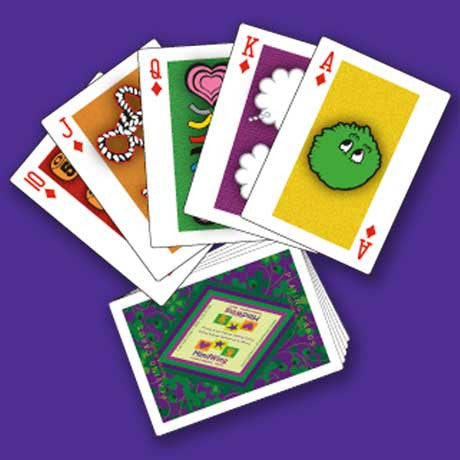
1) Mindwing's Card Deck:  It took me awhile to purchase this card deck because I didn't think it was completely necessary but now I LOVE it!  It's a great way to get the kids a ton of practice with SGM symbol identification and they have a lot of fun with it too!  We primarily played 2 games with these cards but I'm sure there are many more you could play.
  • Go Fish:  We play just like the regular Go Fish game is played.  Each student was given 7 cards and then we went around the circle asking questions.  "Do you have the Setting?" "No, Go Fish." Pretty straightforward.
  • War:  If there are only two kids in the group then I have them play this game.  Also if there is just one student then I play the game with them.  Same as the normal War rules but with a SGM twist.  The deck is divided into 2 and given to each player.  The players lay down their top card at the same time, say what symbol they have, and determine which one is higher (by the numbers on the card).  Player with the higher number keeps the cards.  So basically the only difference is the students have to state the symbol they have before anyone can get the cards.
These card games really seem to speed up the memorization process so they have a good base knowledge of symbol names going into the next phase, which is teaching them how those symbols relate to a story.

MindWing's Card Deck - (Item No 04 050)

2)  Dice Game:  I downloaded an app on my iPad called Make Dice Lite where you can create your own dice and the students can press a button or shake the iPad to roll them.  I made some dice with a story grammar element on each side.  Each player takes a turn rolling the dice and then uses their student SGM tool/braid to point to the corresponding symbol.  I then just give the student a bingo chip if they get it right.


3) "Show Me":  This is a super simple activity where all you need are the student braids.  Each student has a braid and I simply say "Show me the Setting" and the students scramble to point to the Setting symbol.  The student who identifies the correct symbol first, gets a bingo chip.  


Does anyone use any other activities to help with symbol memorization??  I would love to hear about them!!

Read More
Posted in story grammar marker | No comments

Wednesday, 6 March 2013

Movie Trailers and Story Grammar Marker

Posted on 16:55 by Unknown
Before beginning a new book unit with my kids, I decided to do a fun little activity I found on the MindWing Concepts Blog, posted by Sean Sweeney.  For those of you who don't know who Sean Sweeney is, you MUST go check out his blog SpeechTechie!!! It is an amazing resource for how to use technology in the speech and language classroom.

The activity he posted uses the Story Grammar Marker (SGM) to help map out elements found in movie trailers, which are Abbreviated Episode for those of you familiar with the SGM lingo!  An abbreviated episode includes a Character and Setting description, a Kick Off, Internal Response, and sometimes evidence of a Plan. Movie trailers are the perfect way to depict that abbreviated episode structure.  It is also a great way to get students engaged and motivated!

Prior to playing the various movie trailers, we had a brief discussed on what a movie trailer was. Many students thought that it was a place where movie stars lived and/or got ready on set.  Makes sense! However, this is obviously not the movie trailer we are talking about. We talked about the word 'preview' and how a movie trailer is basically just a preview of the movie.  It gives a little snapshot of what the movie will be about.  We then discussed the word 'abbreviated'.  Some students heard of this word before but some had not.  I gave examples of abbreviating words (mr/mister, dr/doctor) and told them that abbreviating is making something shorter or a shorter version of a long word.  They latched on to the idea after those examples.  I compared the Abbreviated Episode to the Complete Episode, which is what we are used to talking about daily.  Last thing we talked about before playing the clip was how a normal Abbreviated Episode in a story usually includes the Tie Up, however a movie trailer does not include the Tie Up.  I asked them WHY they think that might be? We discussed that they wouldn't include the Tie Up in the trailer because then it would give away the ending! 

After these discussions, I gave each student a graphic organizer for an Abbreviated Episode (like the ones shown on the link for the activity above), a pencil, and a clipboard. They already had out their SGM student tools (they grab one off the wall right when they walk in the door, EVERYDAY).  

Here are the movie trailers I played (stopped after each trailer to fill in the elements- Character(s), Setting, Kick Off, Feelings, Implied Plan):


Planet 51 (I always do this one first-icons easily identified)

Finding Nemo

How the Grinch Stole Christmas

Toy Story

Toy Story 3


This activity proved to be a fun way to get the kids more familiar with the Story Grammar Marker, while working on other skills as well! I hope all of you SGM users out there find it useful too :)

Read More
Posted in story grammar marker | No comments
Older Posts Home
Subscribe to: Posts (Atom)

Popular Posts

  • Entertainment Break!!
    Here are my high school dancers performing my routine at a girls basketball game last week: Does anyone else out there coach a dance team?! ...
  • WH Posters
    Just wanted to share with you all a little project I worked on today!  My new  Take Off Tasks  require my students to generate questions in ...
  • Six Strands of Language Lessons and Reflection
    After completing the  Communication Contracts  with my kids, I moved on to teaching them the Six Strands of Language .  This was recommended...
  • Daily Notes & Data Collection
    Just wanted to quickly share how I do my daily notes/data collection.  Last year I changed my data collection methods a million times becaus...
  • More Classroom Pics!
    Here are some new pics of updates in my classroom! New netbooks and desks! Color coded stations Completed SGM Station! Narrative text struct...
  • Speech and Language Curriculum
    As I mentioned in my first post, the speech and language curriculum I have created for myself is based on the three levels of Discourse; con...
  • Homecoming Performance!
    Quick break from speech therapy for some halftime entertainment!.... As stated in my About Me section (and reflected in the name of this blo...
  • 1st Place!
    The high school dance team that I coach attended pom camp last week and they did amazing!  It was their first time at this camp and I am jus...
  • Ways to Help Students Memorize SGM Symbols
    If you are using the Story Grammar Marker program, it is really important to provide the students with ample opportunities to memorize the d...
  • My Journey to Create Structure
    I have always been the type of person who loves structure and routine.   Shortly after starting my job as a school speech and language patho...

Categories

  • asking questions
  • back to school night
  • behavior
  • book units
  • bulletin boards
  • classroom decor
  • classroom pictures
  • communication contract
  • conversation unit
  • curriculum
  • dance team
  • Dancing Tigers
  • data collection
  • Edmodo
  • goal rings
  • oral writing
  • private clients
  • six strands of language
  • story grammar marker
  • take off tasks
  • technology
  • The Independent Clinician
  • vocabulary
  • WH posters
  • whole brain teaching

Blog Archive

  • ▼  2013 (26)
    • ▼  October (4)
      • Updated Classroom Pics
      • New Goal Wall
      • Google Forms for Data Collection <---- Greatest. I...
      • Big News!!............
    • ►  September (1)
    • ►  August (9)
    • ►  April (1)
    • ►  March (4)
    • ►  February (1)
    • ►  January (6)
  • ►  2012 (14)
    • ►  December (2)
    • ►  November (3)
    • ►  October (6)
    • ►  September (3)
Powered by Blogger.

About Me

Unknown
View my complete profile